
What problem we solve
- Reproducibility crisis in biomedical research
- Experimental metadata lost to spreadsheets and silos
- Valuable data that can't be reused across studies or labs
- Animal experiments repeated because data wasn't structured to travel
Structure your experiments. Reuse your data. Better science means fewer animals.

Not an ELN. Not a LIMS. Not an AMS.
Metadatapp sits above these systems as a shared metadata layer.
Metadatapp is:
Useful for labs, data stewards, and communities that want reusable research metadata.
Capture experimental context once, preserve provenance, and make datasets easier to reuse across cohorts and collaborators.
Use APIs, JSON-LD, RO-Crate, and self-hosted infrastructure to connect metadata with existing lab systems.
Build shared schemas, examples, and reusable workflows that help research data travel without losing meaning.
Metadatapp isn't merely "compatible" with FAIR — it makes FAIR measurable and automatic:
Investigations → Studies → Assays. Ingest from LIMS/ELN/AMS with lineage intact.
JSON-LD + RO-Crate + ontology validation so every subject and assay stays comparable across labs and time. See FAIR.
Assets, not files: export, reanalyze, and compare across cohorts. Browse the use cases timeline.
Traceable metadata → higher statistical power → fewer repeated experiments.
Better monitoring → fewer missed phenotypes → earlier decisions.
Cross-site reuse → reduced duplication and cleaner transfers.
Ask: “How many mice could we reduce with 30% reuse of traceable behavioral metadata?” Talk to us.
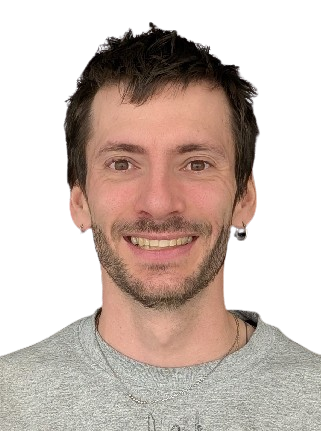
Behavioral neuroscientist and creator of Metadatapp. Leads open-source development at Neuronautix with the help of an AI agent toolchain. Works at the intersection of behavior, physiology, and data science — building tools that make research data worth reusing. Co-developed LWTools; runs TheBehaviourForum.org.

Built the original Metadatapp backend — the Symfony/API Platform architecture you see today is, in large part, his work. Backend expert in API design, system architecture, and scalable module delivery.
Open source and free to use. Explore the features, install it, or join the community around reusable research metadata.
Key takeaways from Damien Huzard's VICT3R webinar on FAIR metadata, operational standardization, and reuse in preclinical in vivo research.
How we make preclinical metadata FAIR-by-design.
 ORCID
ORCID